Vibeselling.site • Modern Selling Method
Bridge the Sales Training-Execution Gap with Consistent Coaching
Uncover why sales training alone often falls short. Learn how continuous coaching transforms knowledge into consistent execution, improving discovery, qualification, and pipeline progression for modern sellers.
AI Summary
Uncover why sales training alone often falls short. Learn how continuous coaching transforms knowledge into consistent execution, improving discovery, qualification, and pipeline progression for modern sellers.. This article covers modern selling method with…
Key takeaways
- Table of Contents
- What happened
- Why it matters for sales and revenue
- Practical takeaways
- Implementation steps
- Tool stack mentioned
By Kattie Ng. • Published March 29, 2026
Explore this article
- Modern Selling Method archive
Browse more modern selling method articles linked from the same category hub.
- Pipeline Progression
Pipeline Progression articles, analysis, and playbooks from Vibeselling.site. Start with Vibe Selling, AI B2B Selling, Modern Selling Method.
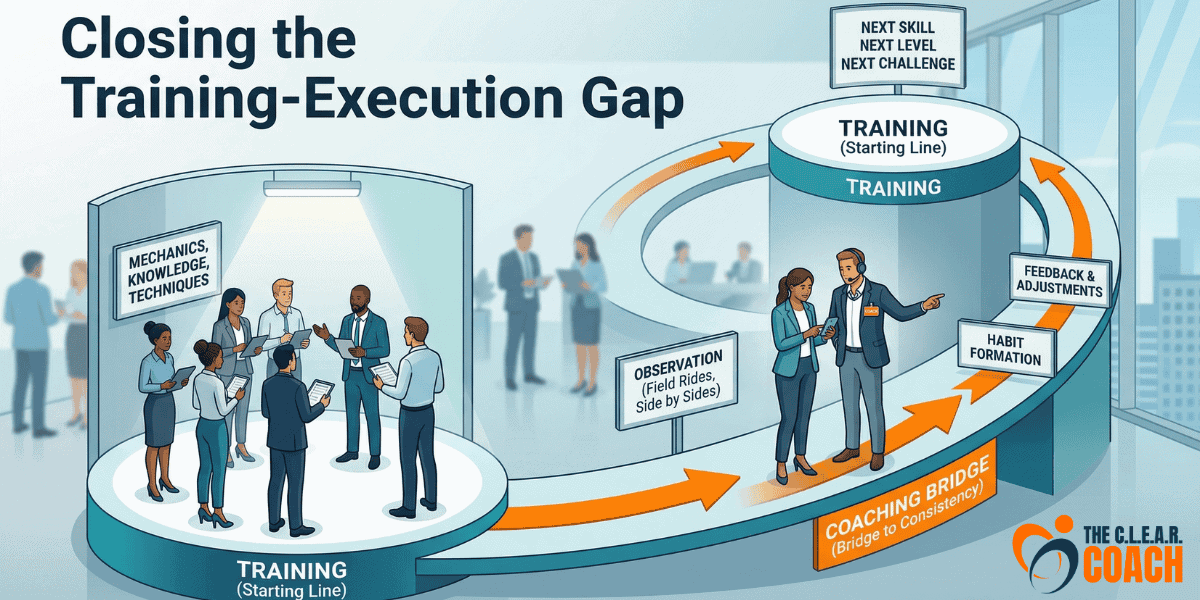
Beyond the Classroom: Why Coaching is the Secret to Consistent Sales Execution
Every sales professional has experienced the rush of a great training session. You walk out armed with new frameworks, clever objection handlers, and refined discovery questions. You’re ready to conquer. Yet, for many, that initial burst of knowledge often fades, failing to translate into consistent, high-impact execution in live conversations. This isn't a failure of the training itself, but rather a common chasm known as the training-execution gap.
At Vibeselling.site, we understand that closing deals isn't just about what you know, but how you apply it. True vibe selling – building genuine connections and guiding prospects effectively – demands consistent, polished execution of skills after that initial outreach. This is where coaching moves from a 'nice-to-have' to an absolute necessity, transforming theoretical knowledge into repeatable, deal-winning behaviors.
What happened
The core issue lies in distinguishing between acquiring knowledge and embedding new habits. Training excels at imparting information and introducing new skills. It’s where reps learn what good discovery questions sound like, how to structure a qualification framework, or the theoretical steps of effective objection handling. They might even practice these techniques in a controlled, low-pressure environment.
However, the real world of sales operates at a different speed and with far greater stakes. A live discovery call, a tough objection, or a complex multi-stakeholder deal demands more than just intellectual understanding. It requires the ability to adapt, think on your feet, and deliver skills consistently under pressure. The gap between knowing a technique in theory and executing it flawlessly in a high-stakes conversation is substantial. Without a bridge, the insights from even the best training programs can quickly dissipate, leaving reps falling back on old habits.
Think of training as the starting line of a race, not the finish. Many organizations treat it as a checkbox, expecting immediate, sustained behavioral change simply because information was delivered. This "finish line" mentality overlooks the critical, continuous work required to transform knowledge into applied competence and, eventually, unconscious mastery.
Why it matters for sales and revenue
This training-execution gap has a direct, measurable impact on sales performance and revenue generation. When reps struggle to consistently apply what they've learned:
- Discovery Conversations Suffer: Inconsistent application of discovery techniques leads to superficial understanding of customer needs, missed pain points, and a failure to uncover genuine buying motivations. This undermines the very foundation of effective vibe selling and makes it nearly impossible to craft truly compelling solutions.
- Qualification is Weakened: Without consistent coaching on how to qualify effectively, reps might struggle to identify true budget, authority, need, and timeline (BANT) signals or other qualification criteria. This results in bloated pipelines filled with unqualified opportunities that ultimately waste time and skew sales forecasting.
- Objection Handling Falters: Knowing how to handle an objection is different from confidently and effectively addressing it in the moment. The lack of practiced, consistent responses can lead to stalled deals, lost credibility, and a failure to move prospects forward.
- Pipeline Progression Stalls: Inconsistent execution across the sales cycle – from discovery to follow-up – directly impacts deal velocity and meeting-to-opportunity conversion rates. Deals get stuck, forecasts become unreliable, and revenue targets become harder to hit. This is the opposite of responsible pipeline progression.
- Wasted Training Investment: Without the follow-through of coaching, the investment in sales training becomes significantly less effective, yielding a lower return on effort and capital.
Ultimately, bridging this gap isn't just about individual rep performance; it's about building a consistent, high-performing sales engine that can reliably drive revenue. It’s about ensuring that the vibe you create with prospects is always one of expertise, trust, and consistent value.
Practical takeaways
For both sales professionals and their managers, closing the training-execution gap through consistent coaching yields significant benefits:
-
For Sales Managers:
- Shift Your Mindset: View training as the kick-off, not the conclusion, of a development journey. Plan for post-training coaching before the training even begins.
- Prioritize Observation: Actively engage in call listening, side-by-side sessions, and field rides. This direct observation is crucial for identifying precisely where the execution gaps lie for each rep.
- Focus on Specificity: Coaching isn't generic advice. It's about providing targeted, actionable feedback on specific behaviors, such as "On your next discovery call, ask two more open-ended questions about their current solution's challenges" or "When they raise the 'price' objection, try reframing it around value first."
- Build a Coaching Cadence: Establish regular, dedicated coaching sessions that are integrated into your weekly rhythm, not an afterthought.
- Emphasize Reinforcement: Ensure that coaching adjustments are implemented and sustained over time. This continuous cycle of observation, feedback, and practice builds muscle memory and lasting behavioral change.
-
For Sales Professionals (AEs, Full-Cycle Reps, Founder-Sellers):
- Actively Seek Feedback: Don't wait for coaching to come to you. Proactively ask managers or peers to review calls, provide input on your discovery approach, or role-play objection handling.
- Embrace the Growth Mindset: Understand that applying new skills in the real world is a process of iterative improvement. Be open to constructive criticism and committed to practicing what you've learned.
- Record and Review Your Calls: Self-coaching is powerful. Listen to your own discovery calls to identify areas where you could have asked deeper questions or handled an objection differently.
- Focus on Consistency: The goal isn't just to execute a skill once, but to make it a consistent habit. Repetition with guided feedback is key. This is how you cultivate your personal vibe selling style.
Implementation steps
To effectively bridge the training-execution gap and drive consistent performance, consider these structured implementation steps:
- Define "Good" Execution: Before any training, clearly articulate what successful execution of a new skill looks like in your sales context. For instance, for "effective discovery," define metrics like "uncovering 3 explicit pain points," "identifying the budget owner," or "mapping the decision process." This gives reps a clear target.
- Integrate Coaching into Training Design: When planning training, build in dedicated time and processes for post-training coaching. This means training isn't just about delivery; it's about setting the stage for subsequent application.
- Establish a Regular Coaching Rhythm: Implement weekly or bi-weekly 1:1 coaching sessions. These should be protected time dedicated to reviewing specific calls, role-playing challenging scenarios, and discussing pipeline progression with a focus on skill application.
- Leverage Call Recordings for Targeted Feedback: Utilize conversation intelligence tools to review live calls. Focus on specific moments where a rep applied (or missed an opportunity to apply) a trained skill. Providing feedback on actual performance moments is far more impactful than generic advice.
- Role-Play and Deliberate Practice: Supplement call reviews with role-playing sessions. These create a safe space to practice new objection handling techniques, refine discovery questions, or rehearse value propositions before a high-stakes client interaction.
- Create a Peer Coaching Culture: Encourage reps to listen to and provide feedback to each other. A collaborative environment where everyone is invested in improving can accelerate skill adoption and reinforce a positive vibe selling culture.
- Track Skill Application, Not Just Training Completion: Shift your focus from simply tracking who attended training to monitoring how consistently new skills are being applied and how that impacts key sales metrics like meeting-to-opportunity conversion, qualification rates, and deal velocity.
Tool stack mentioned
Implementing effective sales coaching relies on several tools that facilitate observation, feedback, and tracking:
- Conversation Intelligence Platforms: Tools like Gong or Chorus are invaluable for recording, transcribing, and analyzing sales calls. They allow managers to quickly pinpoint moments for coaching and reps to self-review.
- CRM (Customer Relationship Management): Platforms like Salesforce, HubSpot, or Microsoft Dynamics allow for tracking of deal stages, qualification criteria, and follow-up activities, providing context for coaching conversations and insights into pipeline progression.
- Sales Enablement Platforms: These can house playbooks, battlecards, and training materials, ensuring reps have easy access to the knowledge they need to apply in real-time.
- Dedicated Coaching Software: Some platforms offer specialized features for tracking coaching plans, feedback delivery, and skill progression over time.
More from Modern Selling Method
Continue exploring
- Vibe Selling
Core process for pipeline creation and revenue growth.
- AI B2B Selling
How account context and AI prep improve live selling execution.
- Pipeline Progression
Pipeline Progression articles, analysis, and playbooks from Vibeselling.site. Start with Vibe Selling, AI B2B Selling, Modern Selling Method.
Original URL: https://vibeselling.site/post/kattie_ng/bridging-sales-training-execution-gap-coaching